


For more than two decades, the Pattern Day Trader (PDT) rule has been one of the most restrictive barriers for active traders in the U.S. If your account was below $25,000, your ability to day trade was severely limited—no matter your strategy, experience, or discipline.
That’s now changing.
Effective June 4, 2026, options traders will be able to day trade with a minimum of $2,000 in their margin account.
This is one of the most significant changes for retail traders in years, especially if you’re trading with a small account.
Removing the PDT rule is a major step forward, creating more access, flexibility, and opportunity for many traders.
Key PDT rule changes: From position limits to intraday risk
The previous PDT rule required traders with a margin account to maintain a balance of at least $25,000. If the account balance was below $25k, and you executed 4+ day trades in 5 days, you were flagged as a Pattern Day Trader, and your trading was restricted.
That framework is now gone, and instead, brokers will use risk-based margin to continuously evaluate your account throughout the trading day, ensuring your positions are supported by sufficient equity in real time.
- No $25K Minimum Account Balance Requirement: Traders are no longer required to maintain an account balance of at least $25,000 to day trade.
- New $2,000 Minimum Account Balance: Traders must still maintain a margin account with at least a minimum balance of $2,000.
- No Restriction on Number of Day Trades: You are no longer limited to 4 day trades in a 5-day window. Open and close as many day trades as your account allows.
- Real-Time Risk Monitoring: Brokerages will manage risk using an intraday margin system that calculates your risk using live, real-time position exposure instead of the number of trades opened and closed.
What this means for options day traders
Traders with less than $25,000 are no longer asking, “Am I allowed to trade?”
You are now asking, “Can my account support this trade right now?”
- If you have less than $25k, a whole new world of opportunity is about to be available.
- You can now enter/exit as many trades per day as you want (within your margin allowance).
- No longer limited to index options and holding through expiration (new symbols, strategies, management)
This change affects nearly all active traders, but especially traders with small accounts. Traders with less than $25k can now trade freely intraday, entering and exiting multiple positions with no punishment based on the quantity of trades.
Active day traders will now have more flexibility in entering and exiting positions, with the ability to take multiple opportunities in a single session.
For options traders specifically, intraday margin requirements are directly tied to position size, spread width, and volatility and price movement.
While options traders need to be aware of assignment, the new PDT rule does open the possibility of trading physically-settled equity options without fear of not being able to close trades to avoid PDT.
New opportunities for day trading
One of the key changes of the new rule is that it allows traders with smaller accounts to finally day trade multiple times, with no restrictions on trade count. Meaning, you can now actively manage positions to close winning positions.
Backtesting lets you see how early trade management can improve your trading results.
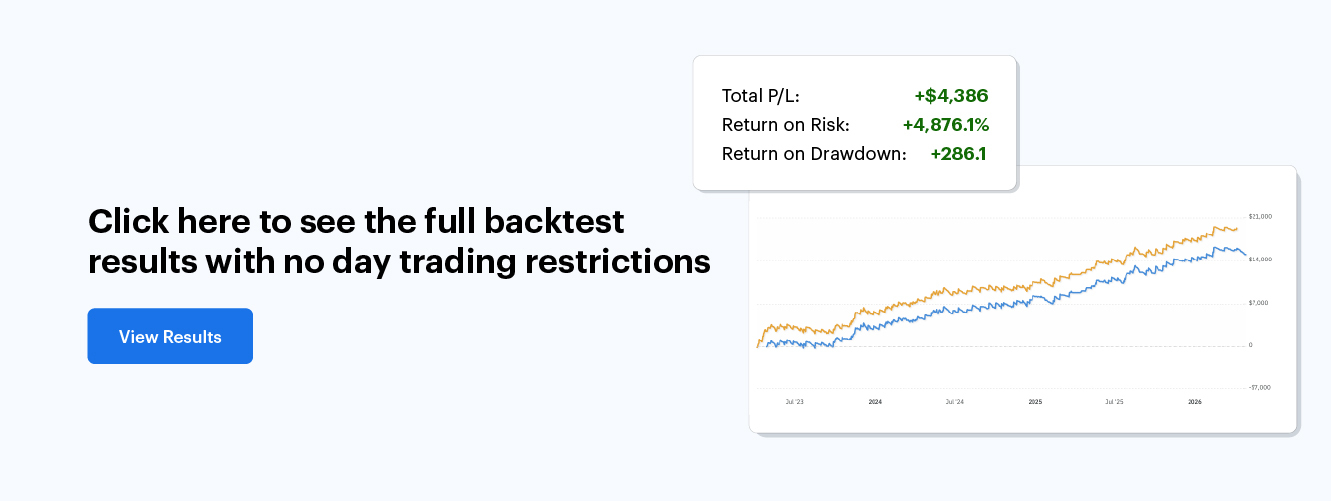
For example, let’s take a look at the popular Flat Fly Bot backtest. Many options traders aren’t able to exit their trades and are forced to hold the position through the close to avoid a day trade.
Now, we can exit at pre-determined profit-taking levels, locking in profit and reducing the effects of late-day price changes.
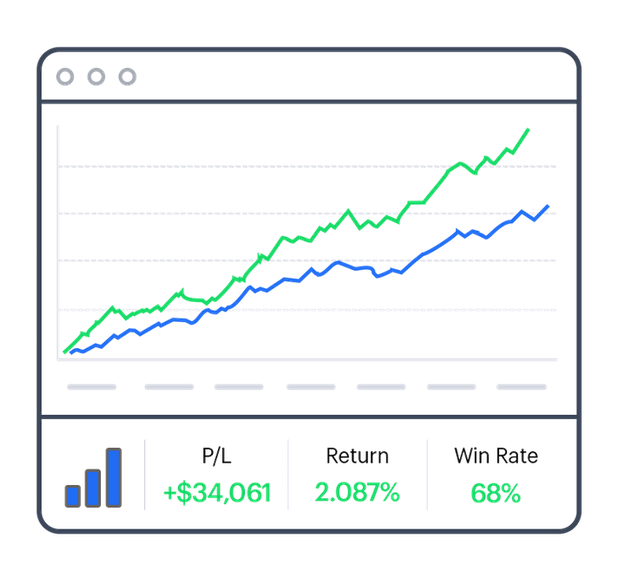
Here’s a look at the 0 DTE SPX iron butterfly strategy with no exit criteria. Adding exit options to close the trade with a 70% profit target increases the total P/L by 29%:
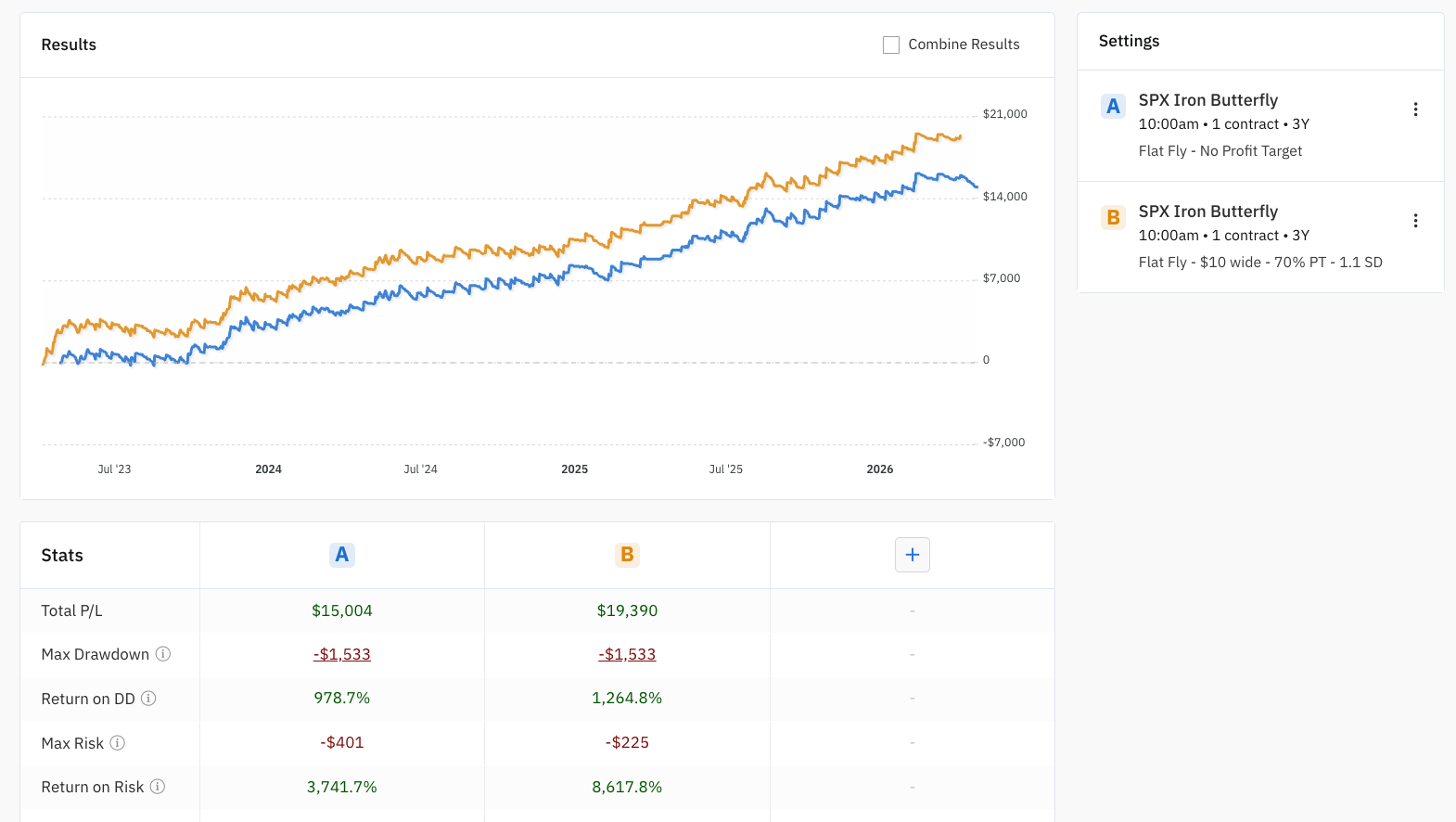
This slight tweak improved the overall position performance while maintaining minimal risk. It would not have been possible under the previous PDT rules if you didn’t have $25k in your margin account, but will soon be available to most all options traders!
What to be aware of with the new PDT rule change
While this change increases flexibility, it also introduces more dynamic risk enforcement.
Margin is now fluid, so your margin requirements can change rapidly throughout the day based on market movement, volatility expansion, and changes in option pricing.
Brokers can act instantly to reject trades that would create margin deficits and reduce positions or restrict activity mid-day.
Intraday swings matter more, as short-term drawdowns matter immediately and large intraday losses can limit your ability to continue trading that same day.
Day trading best practices with intraday margin
To adapt to this new environment, traders should focus on risk efficiency and consistency.
Prioritize defined-risk strategies
Strategies like vertical spreads and iron condors cap maximum loss and provide more predictable margin requirements.
Reduce position size
Smaller positions lower intraday margin swings and allow for more flexibility and re-entry opportunities.




.png)



'%3e%3cg id='Final-Copy-2_2_' transform='translate(1275.000000, 200.000000)'%3e%3cpath class='st0' d='M7.4,12.8h6.8l3.1-11.6H7.4C4.2,1.2,1.6,3.8,1.6,7S4.2,12.8,7.4,12.8z'/%3e%3c/g%3e%3c/g%3e%3c/g%3e%3cg id='final---dec.11-2020'%3e%3cg id='_x30_208-our-toggle' transform='translate(-1275.000000, -200.000000)'%3e%3cg id='Final-Copy-2' transform='translate(1275.000000, 200.000000)'%3e%3cpath class='st1' d='M22.6,0H7.4c-3.9,0-7,3.1-7,7s3.1,7,7,7h15.2c3.9,0,7-3.1,7-7S26.4,0,22.6,0z M1.6,7c0-3.2,2.6-5.8,5.8-5.8 h9.9l-3.1,11.6H7.4C4.2,12.8,1.6,10.2,1.6,7z'/%3e%3cpath id='x' class='st2' d='M24.6,4c0.2,0.2,0.2,0.6,0,0.8l0,0L22.5,7l2.2,2.2c0.2,0.2,0.2,0.6,0,0.8c-0.2,0.2-0.6,0.2-0.8,0 l0,0l-2.2-2.2L19.5,10c-0.2,0.2-0.6,0.2-0.8,0c-0.2-0.2-0.2-0.6,0-0.8l0,0L20.8,7l-2.2-2.2c-0.2-0.2-0.2-0.6,0-0.8 c0.2-0.2,0.6-0.2,0.8,0l0,0l2.2,2.2L23.8,4C24,3.8,24.4,3.8,24.6,4z'/%3e%3cpath id='y' class='st3' d='M12.7,4.1c0.2,0.2,0.3,0.6,0.1,0.8l0,0L8.6,9.8C8.5,9.9,8.4,10,8.3,10c-0.2,0.1-0.5,0.1-0.7-0.1l0,0 L5.4,7.7c-0.2-0.2-0.2-0.6,0-0.8c0.2-0.2,0.6-0.2,0.8,0l0,0L8,8.6l3.8-4.5C12,3.9,12.4,3.9,12.7,4.1z'/%3e%3c/g%3e%3c/g%3e%3c/g%3e%3c/g%3e%3c/svg%3e) Your Privacy Choices
Your Privacy Choices