

Nothing fully prepares you for the emotional and practical realities of trading live with real money, but there are several foundational steps that can make the transition dramatically smoother.
In this episode, Kirk breaks down five key considerations every trader should review before going live. Understand that simulated trading environments—no matter how advanced—can never truly replicate live market conditions and why every trader eventually needs to graduate from paper trading.
Learn why placing an order doesn’t guarantee a fill, how to prepare for “in the money” scenarios and potential assignment, and why it’s essential to ensure your Option Alpha account and brokerage account remain in sync.
Finally, an important reminder that once you go live, discipline becomes your most powerful tool. Having a strategy is one thing—sticking to it during market stress is what separates successful traders from inconsistent ones.
Live markets are not the same as paper trading
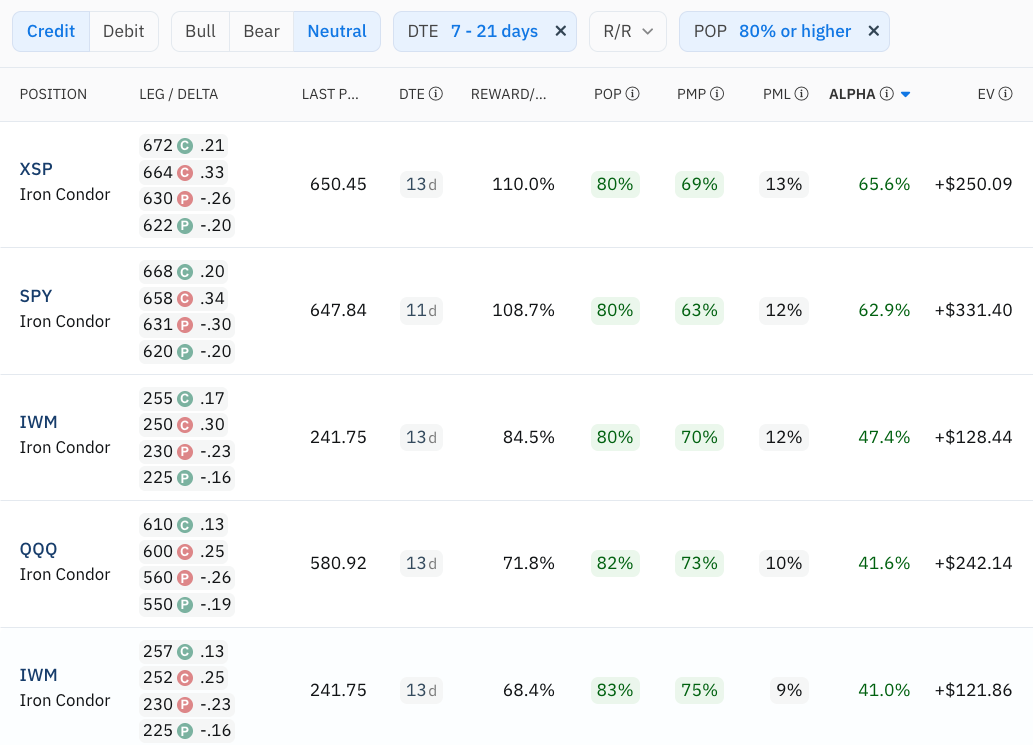
Here's the blunt truth: no paper trading environment can fully reproduce live markets. Even the most realistic paper bots cannot imitate real liquidity, slippage, partial fills, or the psychological impact of real capital at risk. Paper trading should be approached with strict, conservative expectations, especially regarding liquidity and execution.
Traders need to pay attention to liquidity statistics and remember that every real trade requires someone on the other side. Eventually, all traders must transition out of paper trading and into the real market, because only live trading provides the feedback necessary to grow.
Orders do not equal fills
Many new traders assume that placing an order—especially at mid-price—means it will be executed. Live markets don’t work that way. Even “correctly” placedorders may not fill due to liquidity gaps, order flow, and timing.
SmartPricing can help traders set realistic rules around slippage and order execution, but expectations must be grounded in reality: not everything fills at mid, and some trades simply won’t fill at all.
You have to know how to manage in-the-money positions
Managing positions that go in the money (ITM) is not something you want to figure out after it happens. Traders must understand the importance of understanding assignment risk and what steps to take when positions approach expiration.
Because ITM contracts can result in random assignment near expiration, traders must have exit options or management rules in place. If you trade long enough, assignment will happen—so clarity and preparation are essential.
Your Option Alpha account and broker account must be in harmony
Option Alpha is not a brokerage, and therefore cannot automatically detect trades placed directly inside your broker’s platform. If you place trades outside of automation, your platform and broker can fall out of sync, creating confusion and potentially misaligned positions.
Keeping your accounts harmonized ensures accurate tracking, proper risk management, and clean automation execution.
Sticking with your strategy
Once you begin trading live, discipline becomes one of your strongest assets. It is important to trust your strategy, stay patient, and resist the impulse to adjust your process every time the market tests your conviction.
Live trading brings emotional pressure that paper trading never replicates, and taking a step back to zoom out can help traders stay grounded. Patience, persistence, and consistency are critical components of long-term success.
.png)



'%3e%3cg id='Final-Copy-2_2_' transform='translate(1275.000000, 200.000000)'%3e%3cpath class='st0' d='M7.4,12.8h6.8l3.1-11.6H7.4C4.2,1.2,1.6,3.8,1.6,7S4.2,12.8,7.4,12.8z'/%3e%3c/g%3e%3c/g%3e%3c/g%3e%3cg id='final---dec.11-2020'%3e%3cg id='_x30_208-our-toggle' transform='translate(-1275.000000, -200.000000)'%3e%3cg id='Final-Copy-2' transform='translate(1275.000000, 200.000000)'%3e%3cpath class='st1' d='M22.6,0H7.4c-3.9,0-7,3.1-7,7s3.1,7,7,7h15.2c3.9,0,7-3.1,7-7S26.4,0,22.6,0z M1.6,7c0-3.2,2.6-5.8,5.8-5.8 h9.9l-3.1,11.6H7.4C4.2,12.8,1.6,10.2,1.6,7z'/%3e%3cpath id='x' class='st2' d='M24.6,4c0.2,0.2,0.2,0.6,0,0.8l0,0L22.5,7l2.2,2.2c0.2,0.2,0.2,0.6,0,0.8c-0.2,0.2-0.6,0.2-0.8,0 l0,0l-2.2-2.2L19.5,10c-0.2,0.2-0.6,0.2-0.8,0c-0.2-0.2-0.2-0.6,0-0.8l0,0L20.8,7l-2.2-2.2c-0.2-0.2-0.2-0.6,0-0.8 c0.2-0.2,0.6-0.2,0.8,0l0,0l2.2,2.2L23.8,4C24,3.8,24.4,3.8,24.6,4z'/%3e%3cpath id='y' class='st3' d='M12.7,4.1c0.2,0.2,0.3,0.6,0.1,0.8l0,0L8.6,9.8C8.5,9.9,8.4,10,8.3,10c-0.2,0.1-0.5,0.1-0.7-0.1l0,0 L5.4,7.7c-0.2-0.2-0.2-0.6,0-0.8c0.2-0.2,0.6-0.2,0.8,0l0,0L8,8.6l3.8-4.5C12,3.9,12.4,3.9,12.7,4.1z'/%3e%3c/g%3e%3c/g%3e%3c/g%3e%3c/g%3e%3c/svg%3e) Your Privacy Choices
Your Privacy Choices