

What if the biggest threat to short-term trading success is... thinking too short-term? This episode explores a tension many traders feel but rarely name: the pull toward fast results versus the discipline required to stay in the game long enough to let those results compound. While short-term options trading promises speed, excitement, and quick feedback, those same qualities can quietly undermine consistency if they aren’t grounded in a long-term mindset.
The core idea here is simple: sustainable results don’t come from chasing outcomes, but from building systems that can operate reliably over years. Long-term thinking isn’t about slowing down—it’s about staying solvent, focused, and adaptable long enough for skill and edge to matter.
Rather than focusing on individual wins or losses, this conversation seeks to reframe success as longevity, regardless of trade duration. We introduce the concept of “longtermism” as a guiding philosophy—one that prioritizes sustainability, repeatable systems, and emotional detachment over dopamine-driven decision-making. Learn how traders can build structures that support consistency through drawdowns, boredom, and inevitable uncertainty with a practical framework.
The problem with short-term thinking
Short-term trading attracts us because of its immediacy, but without a long-term perspective, that immediacy can become destructive. Many traders unknowingly optimize for excitement instead of survival, mistaking activity for progress.
Short-term thinking feeds emotional cycles that are difficult to escape. Wins feel euphoric, losses feel personal, and every trade begins to carry more meaning than it should. Strategies like 0DTE trading can intensify this effect, offering frequent feedback that encourages overtrading, constant tweaking, and a fixation on streaks.
Measuring success by short-term runs—whether winning or losing—creates false narratives. A string of wins can reinforce bad habits, while a losing streak can push traders to abandon sound strategies. Over time, this cycle leads to undercapitalization, burnout, and emotional exhaustion. The issue isn’t the strategies themselves—it’s the mindset driving their use.
What is "longtermism" in trading?
Longtermism shifts the focus away from individual trades and toward the process that produces them. Instead of asking, “Did this trade win?” the more useful question becomes, “Did this trade follow the plan?” By committing to repeatable strategies and consistent execution, traders reduce the emotional weight of any single outcome.
This mindset encourages attention to broader performance metrics—drawdowns, recovery time, consistency, and capital efficiency—rather than obsessing over marginal wins or losses. When emotions are removed from individual trades, decision-making becomes calmer, clearer, and more sustainable.
Principles behind longtermism
At the core of longtermism is capital preservation. Avoiding overallocation matters more than maximizing upside on any one idea. Systems work best when they’re systematic—rules-based, automated where possible, and grounded in quantifiable edge.
Instead of constantly switching strategies in search of perfection, long-term thinking rewards consistency and patience. Thinking In Probabilities & Risk becomes the guiding forces, not intuition or recent performance. The goal isn’t to predict markets, but to participate in them responsibly over time.
Essential considerations
There is no such thing as the perfect setup. Markets are a continuous trade-off between risk and reward, and consistency comes from managing that trade-off—not eliminating it. Attempts to forecast or control outcomes often create more problems than they solve, especially when emotions are involved.
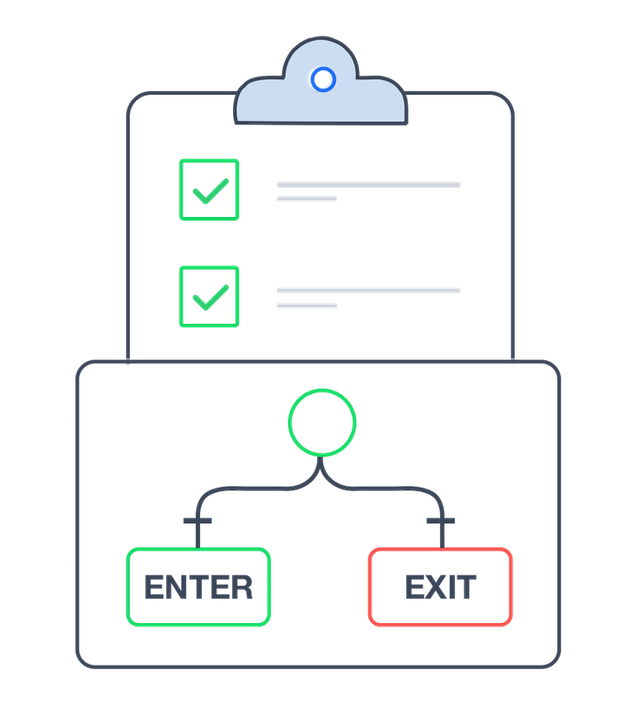
A healthier approach treats trading like a conveyor belt: capital moves through a repeatable process rather than being tied up in one-off ideas. This reduces pressure on individual trades and shifts attention to the system as a whole.
Implementing longtermism in trading
Putting this mindset into practice requires structure. Clear risk limits—such as capping exposure to a single ticker across strategies—help prevent concentrated losses. Automation plays a central role by enforcing rules consistently, especially during emotionally charged moments.
Performance evaluation also changes. Instead of focusing solely on profit and loss, traders assess behavior, execution quality, and alignment with their framework. Improvements are made intentionally and infrequently, avoiding constant daily or weekly adjustments that introduce noise rather than clarity.
Characteristics of an effective trading system
An effective system is resilient—not just to market volatility, but to human emotion. In fact, boredom can be a positive signal, indicating that a strategy is working without constant intervention. Successful trading balances oversight with restraint, allowing systems to operate while reserving human input for higher-level analysis and refinement.
When excitement becomes a requirement, it’s often a sign that something is off. Long-term progress comes from stepping back, reviewing performance thoughtfully, and using research and backtesting to guide measured evolution—not impulsive change.
.png)




'%3e%3cg id='Final-Copy-2_2_' transform='translate(1275.000000, 200.000000)'%3e%3cpath class='st0' d='M7.4,12.8h6.8l3.1-11.6H7.4C4.2,1.2,1.6,3.8,1.6,7S4.2,12.8,7.4,12.8z'/%3e%3c/g%3e%3c/g%3e%3c/g%3e%3cg id='final---dec.11-2020'%3e%3cg id='_x30_208-our-toggle' transform='translate(-1275.000000, -200.000000)'%3e%3cg id='Final-Copy-2' transform='translate(1275.000000, 200.000000)'%3e%3cpath class='st1' d='M22.6,0H7.4c-3.9,0-7,3.1-7,7s3.1,7,7,7h15.2c3.9,0,7-3.1,7-7S26.4,0,22.6,0z M1.6,7c0-3.2,2.6-5.8,5.8-5.8 h9.9l-3.1,11.6H7.4C4.2,12.8,1.6,10.2,1.6,7z'/%3e%3cpath id='x' class='st2' d='M24.6,4c0.2,0.2,0.2,0.6,0,0.8l0,0L22.5,7l2.2,2.2c0.2,0.2,0.2,0.6,0,0.8c-0.2,0.2-0.6,0.2-0.8,0 l0,0l-2.2-2.2L19.5,10c-0.2,0.2-0.6,0.2-0.8,0c-0.2-0.2-0.2-0.6,0-0.8l0,0L20.8,7l-2.2-2.2c-0.2-0.2-0.2-0.6,0-0.8 c0.2-0.2,0.6-0.2,0.8,0l0,0l2.2,2.2L23.8,4C24,3.8,24.4,3.8,24.6,4z'/%3e%3cpath id='y' class='st3' d='M12.7,4.1c0.2,0.2,0.3,0.6,0.1,0.8l0,0L8.6,9.8C8.5,9.9,8.4,10,8.3,10c-0.2,0.1-0.5,0.1-0.7-0.1l0,0 L5.4,7.7c-0.2-0.2-0.2-0.6,0-0.8c0.2-0.2,0.6-0.2,0.8,0l0,0L8,8.6l3.8-4.5C12,3.9,12.4,3.9,12.7,4.1z'/%3e%3c/g%3e%3c/g%3e%3c/g%3e%3c/g%3e%3c/svg%3e) Your Privacy Choices
Your Privacy Choices