

Day trading is a type of investing where you buy and sell a security within the same day and the position is not held overnight. You can day trade any security, including stocks, options, and futures contracts.
Day traders typically enter and exit trades multiple times throughout the day, seeking to profit from small price movements. It can be a risky way to invest, but it can also be profitable if you have a solid strategy.
Pattern Day Trading (PDT)
If you’re considering day trading, it’s important to educate yourself about the pattern day trading rule, and the risks and potential rewards of this investment style. The PDT rule states that investors who make four or more day trades in a five-day period are considered pattern day traders and must maintain a minimum account balance of $25,000. Violating the PDT rule can result in your trading account being suspended by the broker.
Day trading and PDT rules are changing in 2026. Learn more here: PDT Rule Change: What it means for Options Traders
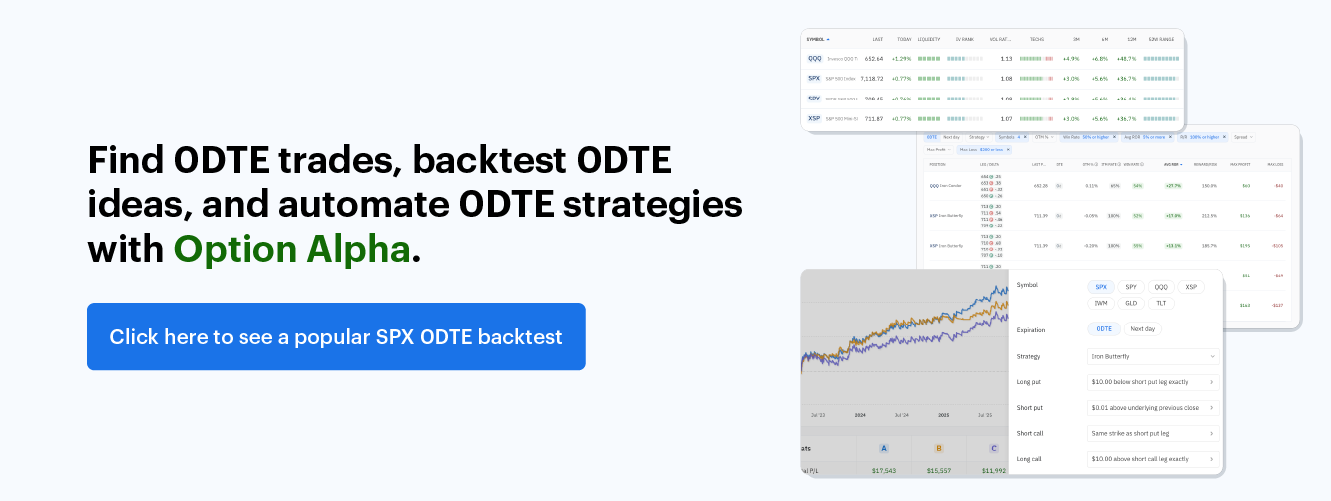
Day trading options (0DTE trading)
0DTE trading has become increasingly popular since 2022, and many options traders use 0DTE contracts to day trade major market indexes. Not all day trading options are 0DTE, though all 0DTE option trades that are opened and closed intraday are technically day trades.
Day trading refers to closing all positions before the session ends, regardless of which expiration the instrument has. 0DTE options are contracts that expire on the same day they are traded — meaning they hit zero days to expiration by the close of the market. Trades left to expire at the end of the day will not count as a day trade.

.png)




'%3e%3cg id='Final-Copy-2_2_' transform='translate(1275.000000, 200.000000)'%3e%3cpath class='st0' d='M7.4,12.8h6.8l3.1-11.6H7.4C4.2,1.2,1.6,3.8,1.6,7S4.2,12.8,7.4,12.8z'/%3e%3c/g%3e%3c/g%3e%3c/g%3e%3cg id='final---dec.11-2020'%3e%3cg id='_x30_208-our-toggle' transform='translate(-1275.000000, -200.000000)'%3e%3cg id='Final-Copy-2' transform='translate(1275.000000, 200.000000)'%3e%3cpath class='st1' d='M22.6,0H7.4c-3.9,0-7,3.1-7,7s3.1,7,7,7h15.2c3.9,0,7-3.1,7-7S26.4,0,22.6,0z M1.6,7c0-3.2,2.6-5.8,5.8-5.8 h9.9l-3.1,11.6H7.4C4.2,12.8,1.6,10.2,1.6,7z'/%3e%3cpath id='x' class='st2' d='M24.6,4c0.2,0.2,0.2,0.6,0,0.8l0,0L22.5,7l2.2,2.2c0.2,0.2,0.2,0.6,0,0.8c-0.2,0.2-0.6,0.2-0.8,0 l0,0l-2.2-2.2L19.5,10c-0.2,0.2-0.6,0.2-0.8,0c-0.2-0.2-0.2-0.6,0-0.8l0,0L20.8,7l-2.2-2.2c-0.2-0.2-0.2-0.6,0-0.8 c0.2-0.2,0.6-0.2,0.8,0l0,0l2.2,2.2L23.8,4C24,3.8,24.4,3.8,24.6,4z'/%3e%3cpath id='y' class='st3' d='M12.7,4.1c0.2,0.2,0.3,0.6,0.1,0.8l0,0L8.6,9.8C8.5,9.9,8.4,10,8.3,10c-0.2,0.1-0.5,0.1-0.7-0.1l0,0 L5.4,7.7c-0.2-0.2-0.2-0.6,0-0.8c0.2-0.2,0.6-0.2,0.8,0l0,0L8,8.6l3.8-4.5C12,3.9,12.4,3.9,12.7,4.1z'/%3e%3c/g%3e%3c/g%3e%3c/g%3e%3c/g%3e%3c/svg%3e) Your Privacy Choices
Your Privacy Choices